Wiring a Barn or Metal Shop in Henderson County: What to Plan Before the Electrician Comes Out
A little planning before the first visit saves you from adding circuits, moving panels and pulling new wire after the walls are closed up.
October 13, 2026 · 4 min read
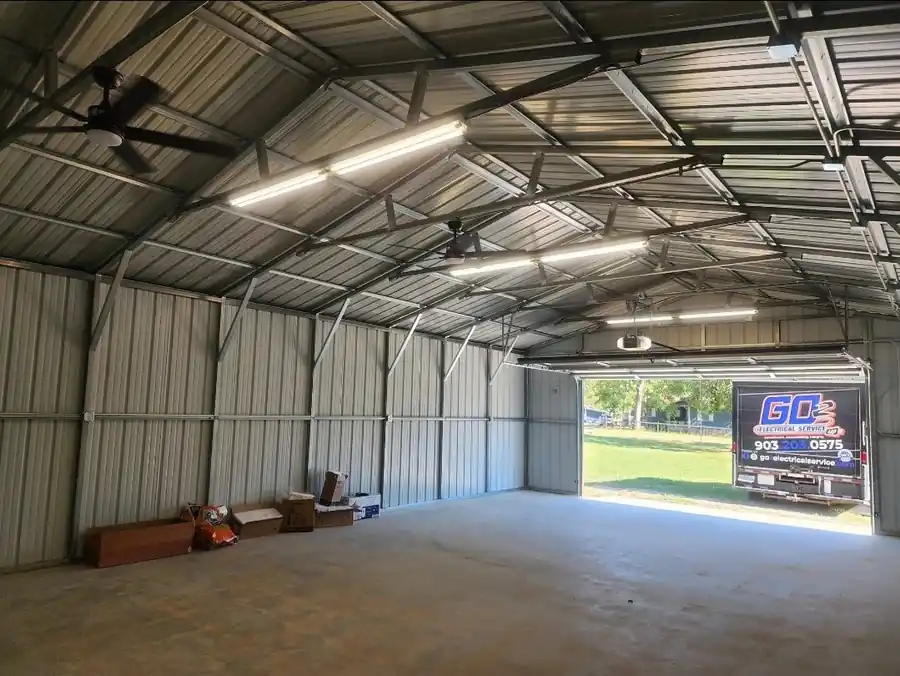
Barns and shops are not houses with the furniture removed. They run heavier equipment, spend their lives around dust, moisture and temperature swings, and they tend to grow. A shop that starts with a few lights and a drill press ends up with a compressor, a welder and a second set of fans. The best time to think about that is before any wire is pulled.
If you are building or upgrading a barn or metal shop in Henderson County, here is how to get ready for your electrician's visit so the plan fits the way you will actually use the building.
What kind of job is it?
Barn and agricultural wiring covers a range of projects. Our own list of the situations we see most often looks like this:
- Building a new barn or agricultural facility
- Adding outlets for tools and equipment
- Installing ventilation fans or climate control systems
- Upgrading outdated or unsafe wiring
- Setting up lighting for work hours
- Powering water heaters and pumps
Knowing which of those you are doing, or which combination, is the first step. A brand new building gives you freedom to plan everything cleanly. An older barn that has been added to over the years is a different job, and it often starts with finding out what is already in the walls.
Start with where the power comes from
Before anything else, think about how electricity will reach the building. Is it right beside the house, or a good distance away across the property? Will the service come from an existing meter, or does the building need its own meter and service? Is there an overhead line or an underground run in your plans? These questions shape the whole project, including how much wire is needed and what size it has to be, so it helps to have a rough idea of the layout before the visit.
Make a list of everything that will plug in or hardwire
This is the single most useful thing you can bring. Walk the building, or picture it, and write down every piece of equipment that needs power. Be generous and include things you plan to add in a year or two.
- Shop tools such as a compressor, table saw, drill press, grinder or welder
- Ventilation fans, ceiling fans and any heating or cooling equipment
- Water heaters, well pumps and other pumps
- Livestock equipment, feed systems, stock tank heaters or fencing chargers
- Lighting, both general and task lighting over workbenches
- Chargers, battery tenders, a refrigerator or a freezer
- Anything you might add later, such as an EV charger or a second welder
If you can read the nameplate on a larger machine, take a photo of it. Equipment ratings tell your electrician how much power it needs and what kind of circuit it has to be on. A machine that needs its own dedicated circuit is much easier to plan for at the start than to squeeze in later.
Think about where you will work
Outlets and lights belong where the work happens. Stand in the building and picture a normal day. Where does the workbench go? Where do you park the tractor or the truck? Where do you need light at 5 a.m. in January? Outlets at work height along the walls, a few at the ceiling for retractable cords or fans, and lights positioned over the places you actually stand will serve you much better than a layout dropped in evenly without thought.
Lighting deserves its own attention. Setting up lighting for work hours is a top request for a reason. Good shop lighting, such as LED strips across a metal ceiling, makes the whole space usable, and it is worth deciding how bright you want each area before the fixtures go up.
Plan for the conditions in the building
A barn is a harder environment than a living room. Dust gets into everything. Moisture from washdown, animals or humid East Texas summers can reach fixtures and outlets. Rodents chew on wire. Metal buildings swing through big temperature changes. Wiring methods, enclosures and protection devices should be chosen with those conditions in mind, and outlets in damp or exposed areas need appropriate protection. Tell your electrician honestly how the building gets used, including the messy parts. That information changes what gets installed.
Old wiring needs an honest look
If you are upgrading an older barn or shop, plan for the possibility of finding things you did not expect. Extension cords used as permanent wiring and overloaded circuits are common in buildings that have been added to over many years. Upgrading outdated or unsafe wiring is part of the work, and a clear explanation of what was found and what it needs is the right thing to expect.
A short list to bring to the visit
- A rough sketch of the building with doors, work areas and where equipment will sit
- Your equipment list, with photos of nameplates where you can
- The distance from the house, meter or pole to the building
- What you want to add in the next few years
- Any problems you have now, like tripped breakers, dim lights or warm cords
Walk the building with your electrician. Ten minutes on site beats an hour of guessing.
Our Barn Wiring Installation service covers agricultural buildings, shops and metal buildings across Athens and the surrounding area, from new builds to upgrades. Your technician is Justin Zimmerman, the owner and a master electrician, and our work carries a five-year labor warranty. Call (903) 218-3632 and tell us what you are planning.
GO 2 Electrical Service LLC, (903) 218-3632
Call (903) 218-3632More articles
Why Your Breaker Keeps Tripping (and Why Resetting It Again Is the Wrong Fix)
A breaker that trips once is doing its job, and one that trips repeatedly is telling you to find out why.
Standby Generators for Homes Outside Town: What Goes Into a Safe Install
A standby generator is only as good as the planning behind it, and most of that planning happens before the machine ever arrives.