Standby Generators for Homes Outside Town: What Goes Into a Safe Install
A standby generator is only as good as the planning behind it, and most of that planning happens before the machine ever arrives.
October 13, 2026 · 4 min read
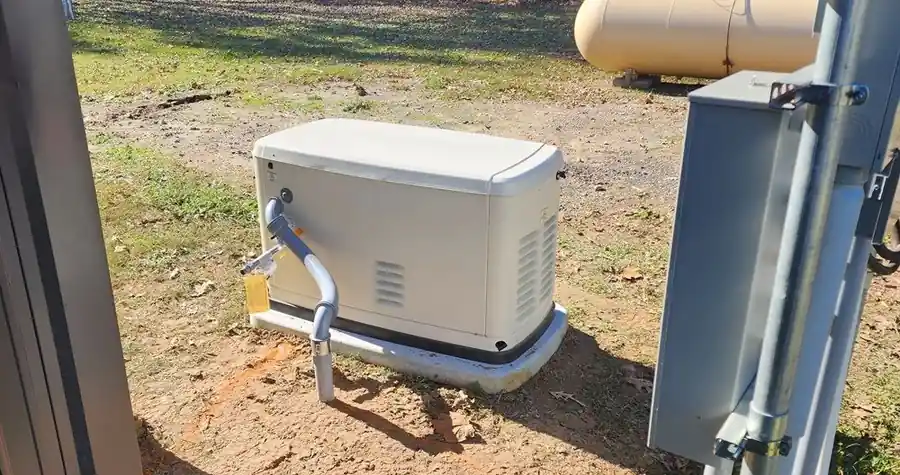
When the power goes out in town, crews tend to get to it quickly. Out on a county road, with long stretches of line running through trees and pasture, an outage can last a lot longer. East Texas storms are a regular reason for that, and if you have a well pump, a freezer full of food, medical equipment or animals that depend on fans and water, a long outage is not just inconvenient.
That is why many people who live outside town start looking at a standby generator. This is the kind that sits on a pad beside your house, starts on its own when the power drops, and shuts itself off when power returns. Installing one safely takes more than setting a machine down and running a cord.
Standby versus portable
A portable generator is something you drag out, fuel up and connect yourself, which means you need to be home and awake. A standby generator is permanently installed, wired into your electrical system and connected to a fuel supply. It senses an outage, starts, and transfers your house over without anyone touching it. Our FAQ describes the goal simply: standby generator installations that supply automatic power during electrical outages.
The transfer switch is the safety device that matters most
If you remember one thing from this article, make it this one. A generator must never be connected to your house wiring without a transfer switch. The switch does one critical job: it makes sure your house is connected either to the utility or to the generator, never both at once.
Without that separation, power from a generator can flow backward onto the utility lines, which puts the people restoring power at serious risk and can damage your equipment. A properly installed transfer switch prevents it, decides which circuits get backup power, and handles the switchover automatically.
Sizing: deciding what the generator has to carry
Sizing is where a lot of installs go wrong in one direction or the other. Too small and it cannot start the motors you care about. Much bigger than you need and you pay for capacity you never use.
Good sizing starts with a conversation about what you actually need to run during an outage. Do you want the whole house, or just the essentials? Think through the list:
- Well pump, since no power often means no water
- Refrigerator and freezer
- Heating and cooling equipment, which are often the largest loads in the house
- Medical equipment or anything that cannot be without power
- Shop, barn or pump house circuits, if they matter to you
Motors are the part people overlook. Anything with a motor, like a pump or an air conditioner compressor, pulls much more current for a moment when it starts than it does while running. The generator has to handle that surge as well as the steady load. This is why sizing is worked out from the real equipment on your property rather than guessed from square footage.
Fuel has to be planned alongside the electrical work
A standby generator runs on fuel, and for most properties outside town that means propane stored in a tank on site, though some properties have natural gas available. The fuel supply has to be planned together with the electrical install, not after it.
Think about where the tank sits, how the fuel line will reach the generator, how much fuel storage gives you the runtime you want, and who fills the tank. The generator also needs to sit where it can be reached for service and where exhaust and heat will not cause trouble near windows, vents and walls. Following the manufacturer's clearance requirements matters here.
The electrical connections
Once the location, fuel and sizing are settled, the electrical side comes together. That includes the wiring from the generator to the transfer switch, the connection into your panel, proper wire sizing for the distance and the load, and the disconnects and protection that go with it. This equipment may sit idle for months and then be asked to perform in a storm, so every connection counts. Our own description of this work is that we handle the electrical connections, transfer switches and testing so the backup system works when you need it most.
Testing is not optional
An untested generator is a hope, not a backup plan. A real install ends with testing: starting the unit, confirming it comes up to speed and holds steady, simulating a power loss so you can watch the transfer switch do its job, running the connected loads, and confirming everything returns to normal when utility power is restored. You should see it work before the installer leaves.
Keep it ready after the install
A standby generator is an engine, and engines need care. Most units run a short test cycle on a schedule. Keep fuel topped up, keep brush and debris clear, and follow the manufacturer's maintenance schedule.
If you are thinking about backup power for a home or property outside Athens, our Generator Installation service covers the electrical side from start to finish, from sizing and transfer switch to testing. Justin Zimmerman is a master electrician and the owner, and installs carry a five-year labor warranty. Call (903) 218-3632 and we can talk through what you would want to keep running.
GO 2 Electrical Service LLC, (903) 218-3632
Call (903) 218-3632More articles
Why Your Breaker Keeps Tripping (and Why Resetting It Again Is the Wrong Fix)
A breaker that trips once is doing its job, and one that trips repeatedly is telling you to find out why.
Wiring a Barn or Metal Shop in Henderson County: What to Plan Before the Electrician Comes Out
A little planning before the first visit saves you from adding circuits, moving panels and pulling new wire after the walls are closed up.